Upgraded Honey Crunch

I don’t know why I bother asking the family what they’d like in the biscuit tins every week, because the answer is always something sugar-laden and dripping with icing (peppermint slice and afghans are popular requests). Needless to say, I never actually make said sugar bombs, but occasionally I try to devise a healthier version of a favourite to keep everyone happy.

Hence this improved version of Honey Crunch; not the ultimate health food but far lower in sugar and higher in fibre and than the original. It’s also gluten and dairy free. I’ve added buckwheat groats which provide flavonoids and various minerals, replaced the brown sugar and golden syrup with non-refined sugars, and substituted coconut oil for the butter. It’s surprisingly tasty and very moreish, and satisfies those sweet cravings without giving you a blood-sugar overload.
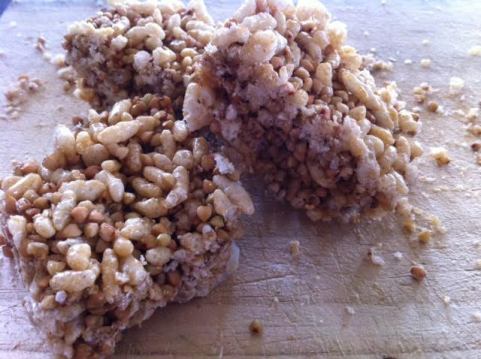
crunch

Upgraded Honey Crunch

1 cup buckwheat groats

2 cups rice bubbles

60 grams  + 1 tablespoon coconut oil

3 tablespoons honey

2 tablespoons rice syrup

1 teaspoon blackstrap molasses

1 teaspoon vanilla paste

1/2 teaspoon sea salt flakes

Melt the extra tablespoon of oil in a roasting dish, coat the buckwheat with oil and spread it out in a single layer. Bake at 180 degrees until golden, about 20 minutes.

In a large saucepan, melt the honey, syrup, molasses, coconut oil, vanilla paste and salt. Boil this for about 3 minutes or until it’s kind of frothy. It won’t make a caramel but it will combine.

Gently stir through the buckwheat groats and rice bubbles until combined, then press into a slice tin. I use a silicon one so it’s easy to get the crunch out. Refrigerate for several hours until set, tip out onto a chopping board and cut into slices.

Keeps in an airtight container for 3-4 days.



Caffeine: the best legal performance enhancer for runners!

I have always insisted on a cup of coffee before a race or a long run, because I know I’ll feel like crap without it. I took me a while to cotton on to the fact that it was actually helping my performance though!

All the studies on caffeine use in athletes show that in moderate doses, it can have a positive effect on performance. The main reason seems to be that it enhances reaction time, so the messages get from your brain to your muscles more quickly, helping you run faster and feel less stress. It can also improve your body’s use of fat as a fuel,avoiding glycogen depletion and that ‘dead-leg’ feeling. For more information about caffeine use in athletes, check out this excellent article.

Experts say that the best time to drink coffee is an hour before a race, and this is certainly what I have found works for me. It might mean a toilet stop slightly earlier than planned though!

Because I don’t want to be slowed down or bloated by a milky, frothy coffee, I now drink cold brew before my runs. It is perfect because it doesn’t require any milk or sugar, and is smooth and mellow. I didn’t invent the process of making cold brew, but would like to share the recipe because it’s delicious and incredibly easy to make. Even if you’re not usually a black coffee drinker (I certainly wasn’t), I urge you to try this. Because the coffee beans aren’t heated at any stage of the process, the coffee doesn’t become bitter but stays mild and sweet.

Here’s what I do:

Buy a standard 200 gram bag of ground coffee in a plunger grind. If you like to grind your own beans, use the coarsest setting on your grinder.

Tip the coffee and a 1.5 litre bottle of filtered water into a bowl, stir, cover and leave for 24 hours.

After 24 hours, you need to filter the coffee. I do this in 2 stages. First, tip the lot through a sieve to get the bulk of the grounds out. I chuck these on my garden as fertiliser.

Then get a piece of muslin or a double-ply paper towel and use it to line a funnel. Sit this in a 1.5 litre glass bottle and gradually tip the coffee into it. It takes about 20 minutes to filter it, so I usually just leave it dripping and tip a bit more in each time I walk through the kitchen.

Once it’s all filtered, that’s it! Keep the bottle in the fridge, and when you want to make a coffee, pour 2-3 cm into a coffee cup and top with boiling water. You can play with the coffee to water ratio until you find the way you like it.

This is also really portable; I often take a screw-top jar of the concentrate to work and top it up with boiling water for a much nicer coffee than staffroom instant!

I would love to hear feedback from anyone who gives this a go, so please leave a comment and tell me how you found it. I hope to create a couple of cold-brew converts!


Black_Coffee_Cup_PNG_Clipart_Image

Savoury Seeds

O.K, so not really a recipe, but something every healthy-minded person needs to have in their house!

Every few weeks I whip up a batch of these savoury seeds, then get them out whenever I want something to sprinkle over meals. They are full of protein and healthy fats, zinc, vitamin B-6 and magnesium, and replace less healthy toppings like bread crumbs or cheese.

I recommend you make some of these and have them on hand the next time your meal needs a bit more oomph. I use them in wraps, stir-fries, salads, soups and curries. Here I’ve sprinkled them over an asian salmon and coleslaw meal:

seeds

1 cup pumpkin seeds

1 cup sunflower seeds

2 tablespoons sesame seeds

4-6 tablespoons tamari sauce (or other good quality soy sauce)

Mix the sauce through the seeds and spread in a single layer on a baking tray. The sauce should coat all the seeds but not puddle underneath them. Bake at 150 degrees on fan bake, turning often, until brown and toasty. Remove from oven, wait until cool, then store in an airtight container. Will keep for several weeks.


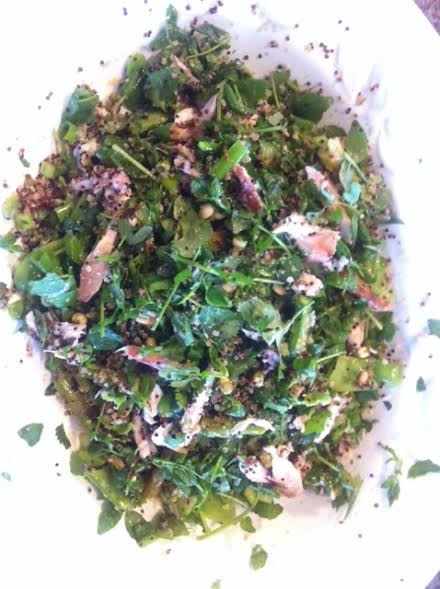
Smoked fish, quinoa, amaranth and watercress salad

Things starting getting exciting for me this morning when I found fresh broad beans at my local farmer’s market. These guys have had a bad reputation in the past, but cooked right and removed from their grey skins they taste delicious! I got even more animated when I found fresh bunches of watercress and coriander, then positively ecstatic when I stumbled upon a fishmonger selling smoked local seafood. The germ of an idea for a salad recipe was born, and I have to say, the result was pretty stunning! Here’s the recipe:

smoked fish

For the salad:

2/3 cup mixed quinoa and amaranth

1 bunch fresh watercress

1/2 bunch fresh coriander leaves

1 cup snow peas

1 handful mung bean sprouts

2 spring onions

1 big bag of broad beans in their pods, or 1/2 cup frozen broad beans

1 bunch asparagus

1 fillet smoked fish (I used Kahawai)

3/4 cup milk

For the dressing:

Juice of 1 lemon

3 tablespoons extra-virgin olive oil

1 teaspoon wholegrain mustard

Flaked sea salt

Boil the quinoa and amaranth mix in water according to packet instructions.

Pour the milk into a frypan and gently simmer the fish, flesh side down for about 10 minutes.

Chop the watercress, coriander, snow peas and spring onions and mix in a large salad platter.

Cut the asparagus into 1 cm pieces and boil. Pod the the broad beans, and boil along with the asparagus until they float to the top. Drain the asparagus and broad beans, then slip all the beans from out of their grey skins. Add the little green beans and asparagus to the salad.

Remove the fish from the milk, peel off the skin, and gently flake the fish into the salad.

Drain the cooked quinoa/amaranth and add to the salad.

Combine the dressing ingredients, and toss through the salad until everything is well combined coated with dressing.

Quinoa and amaranth are both great sources of protein, with quinoa containing a complete amino acid profile and amaranth coming very close. This makes them a great option for vegetarians wanting to get more protein into their diet.

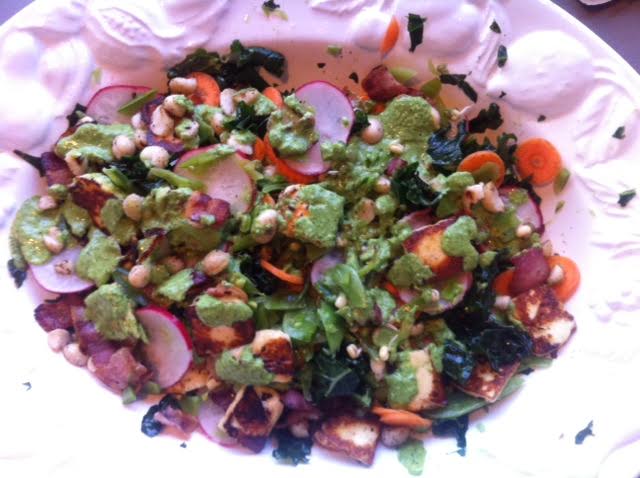
Kale salad with haloumi and macadamia nuts

This is our go-to salad when we need serious veges but still want something substantial and filling. I’ve taken this salad to a BBQ and had a grown man eat it straight from the salad bowl! I’ve added a small amount of naturally cured, free range bacon to keep the carnivores happy, but this is entirely optional.

There are 3 secrets to turning kale from a tough, bitter weed into a delicious salad vegetable:

  1. Season it with olive oil, lemon juice, salt and pepper.
  2. Be prepared to spend about 10 minutes massaging the seasoning into the chopped kale leaves, until they turn dark green and soft.
  3. Let the massaged kale sit for at least 20 minutes before eating to allow the flavours to infuse and the leaves to continue to soften.

macadamia salad

For the kale:

1 bunch kale

2 tablespoons olive oil

Juice of half a lemon

Salt and pepper

For the salad:

1 carrot, grated or sliced

2 radishes, sliced

1/2 cup of mung bean sprouts

3/4 cup snow peas, chopped

1 block of haloumi cheese, sliced

4 rashers of free-range streaky bacon, cut into pieces

1/2 cup of raw macadmia nuts

For the dressing:

1 big handful of coriander leaves

2 spring onions

2 tablespoons of yogurt

Juice of half a lemon

Wash, chop, season and massage the kale. Leave to rest while you prepare the rest of the salad vegetables, and mix them all in a big platter. Fry the bacon, remove from pan, fry the haloumi on both sides and remove, then toast the macadamias until lightly brown. Sprinkle all of these over the vegetables.

In a high-speed blender, blend the dressing ingredients until smooth and creamy. Spoon over the top of the salad and get into it!

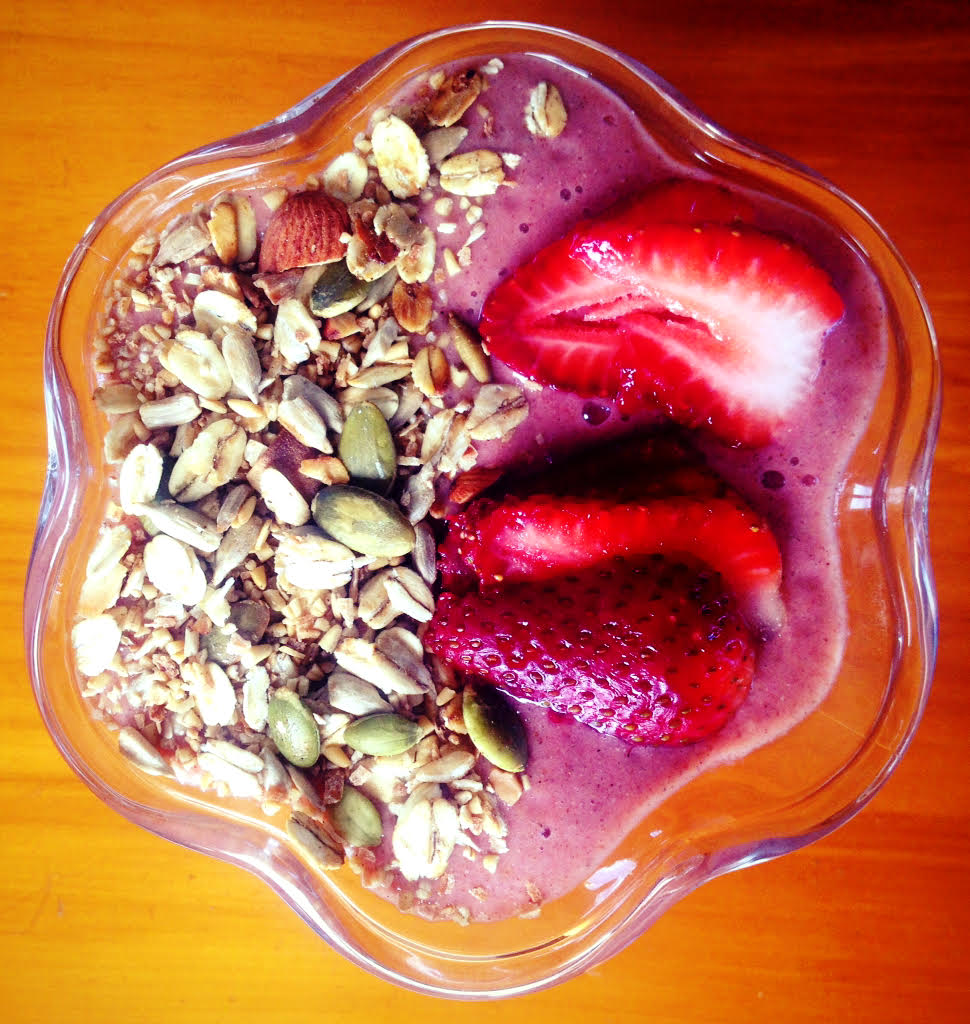
Banana Strawberry Smoothie Bowl

A smoothie bowl is an excellent recovery meal after a run, especially if it has a good helping of nuts, seeds and oats. I whipped this one up this morning:

smoothie

2 bananas

1 cup frozen strawberries

1 cup almond &coconut milk

1 tsp cinnamon

1/2 tsp vanilla paste

2 dates

1 tablespoon chia seeds

2 fresh strawberries

A handful of toasted muesli

Put the bananas, frozen strawberries, milk, cinnamon, vanilla, dates and chia seeds into a blender and blend until thick and creamy.

Pour into 2 bowls/glasses, and top with sliced strawberries and muesli.

Serves 2

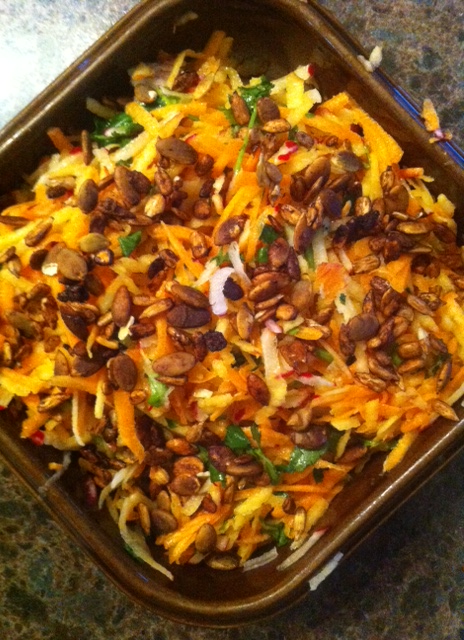
Carrot salad

So, we needed a salad to have with dinner, but the greens situation was decidedly sad. I was pretty pleased to be able to whip up something half decent with the remnants of the vege bin, and manage 3 of my 5+ in the process.

carrot salad

For the salad:

1 large carrot

2 radishes

1 apple

1 handful chopped coriander

1 handful toasted seeds

For the dressing:

1 teaspoon honey

juice 1/2 a lemon

1 teaspoon sesame oil

pinch sea salt flakes

1 teaspoon white wine vinegar

Grate the carrot, radish and apple into a bowl and stir through the coriander. Combine all the dressing ingredients and mix well. Stir the dressing through the salad and season to taste.

Do active people need carbs?

It seems like every day a new study comes out about which foods are ‘super’ and which ones are going to kill us. I don’t know if it’s just me, but beneath all the hype and contradiction, the same basic message seems to hold true; eat LOTS of fresh fruit and vegetables, some healthy wholegrain, some protein, some good fat, and avoid processed stuff as much as possible.

I find most of this advice pretty easy to follow, (as you can see from my salad recipes!), but find the advice around carbohydrates really confusing.

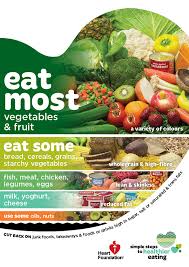
In New Zealand, the Heart Foundation has carbohydrates sitting second on the Food Pyramid in the ‘eat some’ category, just above fruit and vegetables and below meat and eggs. At the same time, there is a strong Low-Carb/No-Carb movement championing the removal of all carbs from our diet.

pyramid

I am not a nutritionist, but have spent 20 years learning what works for me, and have come to some conclusions around carbs.

  1. Here in NZ we generally eat too much carbohydrate. Toast for breakfast, sandwiches for lunch, crackers for afternoon tea, rice for dinner; you get the picture. If you are looking to make a healthy change to your diet, carbs could be a good place to start.
  2. Many people, especially active people, need carbs. I know I do! Cutting carbs when you are burning a lot of energy through exercise can cause your body’s glycogen stores to deplete, forcing it to use fat or muscle protein. Find out more about why active people need carbs here.
  3. Glycaemic Index (GI) is more important than total carbs consumed. Eating low GI foods avoids blood sugar spikes and slumps, and helps maintain an even rate of energy burning. Becoming familiar with the Glycaemic Index could really help with your energy levels. You can find a good GI chart here
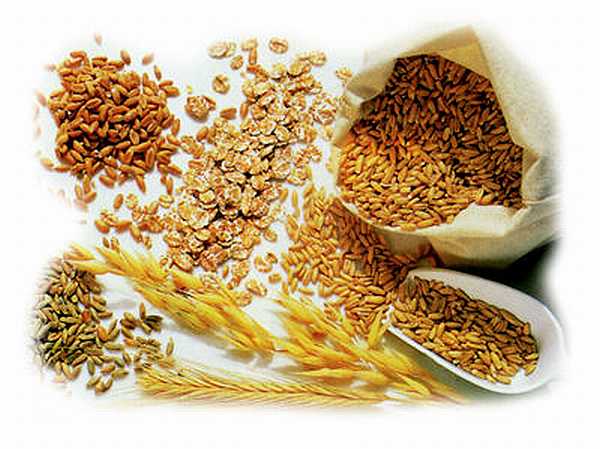
  4. Make your carbs count by eating as many whole grains and unprocessed products as possible. This means making some simple swaps, but by opting for the brown version, you will ensure you get all the nutrients in the outer layer of the cereal/vegetable that are taken away in processing.
  5. Timing matters. I need simple carbs (higher GI) before and straight after a big workout, and more complex carbs every 2.5-3.5 hours the rest of the time.

Whole-Grains

So, I need to remind myself that carbs are not baddies, I do need to eat them to fuel an active lifestyle, but I need to choose low GI, high-fibre, whole foods with as little processing as possible. I can do that.